Reviving Nostalgia: The Versatility of the Vintage Picnic Icon Collection
In the world of graphic design, there is a perennial tug-of-war between the hyper-modern and the deeply nostalgic. While sleek, minimalist interfaces dominate the digital landscape, there remains a profound appetite for textures and imagery that evoke a sense of history and warmth. This is where the Vintage Picnic Icon Collection steps in, offering a curated set of visuals that bridge the gap between classic Americana and contemporary design needs. More than just a set of clip art, this collection serves as a foundational toolkit for designers looking to inject character, storytelling, and timeless elegance into their projects.
The Aesthetic Power of High-Contrast Black and White
The defining characteristic of this specific set is its commitment to high-contrast black and white vector graphics. In an era often cluttered with gradients, drop shadows, and excessive color palettes, the stark simplicity of monochrome vector art stands out for its clarity and sophistication. The Vintage Picnic Icon Collection leverages this aesthetic to ensure that every element remains legible and impactful, regardless of the background or medium it is applied to.
This approach offers significant practical benefits. When you strip away color, you are left with pure form and line weight. This makes the icons incredibly versatile. A designer can easily recolor these assets to match a brand's specific palette without worrying about clashing tones or muddy blending modes. Whether the project requires a bold red for a summer sale or a muted sage green for an eco-friendly event, the underlying structure of the artwork remains crisp and professional. The high-contrast nature also ensures that these images reproduce beautifully on physical media, from screen-printed t-shirts to embossed packaging, where fine details might otherwise get lost in translation.
Deconstructing the Six Essential Elements
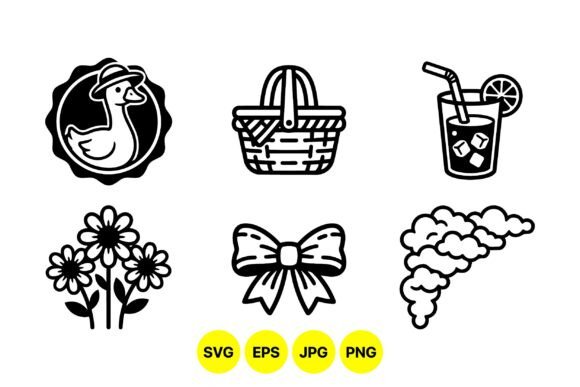
The collection is thoughtfully composed of six distinct yet thematically linked icons, each chosen to represent the quintessential elements of a leisurely outdoor gathering. Understanding the individual utility of these assets helps designers maximize their potential within a broader creative workflow.
- The Duck Badge: Often associated with vintage camping gear and outdoor apparel, the duck badge acts as a symbol of nature and adventure. It works exceptionally well as a standalone logo mark or a subtle watermark in the corner of a poster. Its organic shape contrasts nicely with geometric layouts.
- The Woven Picnic Basket: Perhaps the most recognizable symbol of the genre, the basket icon immediately communicates "gathering" and "food." The detailed weaving pattern, rendered in vector format, adds a tactile quality that flat designs often lack. This is ideal for catering menus, food blogs, or event invitations.
- Iced Beverage with Straw and Lemon: This element captures the essence of refreshment and summer heat. It is a dynamic icon that suggests action and enjoyment. Designers frequently use this in beverage branding, cocktail recipes, or seasonal promotional materials.
- The Flower Bouquet: Adding a touch of softness and romance, the bouquet balances the more utilitarian items like the basket and drink. It is perfect for wedding stationery, garden party flyers, or floral shop branding.
- Decorative Bow: A bow serves as an excellent accent piece. It can be used to frame other elements, signify a gift, or add a festive flourish to headers and footers. Its versatility lies in its ability to tie a composition together visually.
- Cloud of Smoke: This unique addition hints at a campfire, a barbecue grill, or simply the hazy atmosphere of a warm day. It provides texture and depth, allowing designers to create atmospheric backgrounds or suggest the scent of cooking outdoors.
Technical Superiority: Why Vector Matters
One of the most critical aspects of the Vintage Picnic Icon Collection is its technical foundation. The inclusion of 100% vector SVG and EPS files means that the artwork is resolution-independent. Unlike raster images (such as standard JPEGs) which pixelate when enlarged, vector graphics are built on mathematical equations. This allows a designer to scale a small favicon up to the size of a billboard without any loss of quality.
For modern workflows, this scalability is non-negotiable. Consider a marketing campaign that spans multiple platforms: a social media post, a website banner, a printed flyer, and a large vinyl banner for an event entrance. With raster images, a designer would need to create multiple versions of the same asset at different resolutions. With the vector files included in this ZIP folder, they only need one master file. They can resize the duck badge or the picnic basket instantly, ensuring sharp edges and clean lines everywhere.
Furthermore, the inclusion of PNG and JPG formats provides immediate convenience for quick-turnaround projects. If a user needs to drop an image into a presentation or a simple email newsletter without opening vector software, the high-resolution PNGs offer a ready-to-use solution. This hybrid approach—offering both editable source files and flattened web-ready images—caters to a wide range of skill levels, from professional illustrators to small business owners managing their own marketing.
Integrating Icons into Modern Branding Strategies
How does a vintage-style collection fit into a modern brand? Surprisingly, the answer is easier than one might think. There has been a massive resurgence in "retro-modern" aesthetics across various industries. Brands are realizing that nostalgia builds trust and emotional connection. By incorporating the Vintage Picnic Icon Collection, businesses can tap into feelings of comfort, tradition, and community.
Take the craft beer industry, for example. Many breweries utilize vintage-inspired logos and labels to differentiate themselves from mass-produced competitors. The cloud of smoke and iced beverage icons could be seamlessly integrated into a label design, suggesting a relaxed, outdoor drinking experience. Similarly, boutique coffee shops often lean into rustic themes; the woven basket and flower bouquet could adorn their cup sleeves or menu boards, reinforcing a message of artisanal quality and slow living.
In the lifestyle sector, these icons are invaluable for content creators. A blogger writing about sustainable living or outdoor family activities can use these graphics to break up text, create engaging infographics, or design custom headers. Because the style is neutral and classic, it doesn't date quickly. An article written today using these icons will still look relevant and stylish five years from now, unlike trends that rely on fleeting visual fads.
Practical Applications Across Industries
The utility of this collection extends far beyond simple decoration. Here are several scenarios where the Vintage Picnic Icon Collection proves its worth:
- Event Planning and Invitations: Wedding planners and corporate event organizers can use these icons to create cohesive branding for outdoor events. A combination of the bow, basket, and flowers creates an instant theme for a garden wedding or a summer corporate retreat.
- Packaging Design: For local farmers markets or artisanal food producers, packaging is key. Stamping the duck badge or the lemonade icon onto a kraft paper bag elevates the perceived value of the product inside, signaling quality and care.
- Digital Marketing Assets: Social media managers can use these vectors to create eye-catching story highlights, Instagram carousels, or blog thumbnails. The high contrast ensures they remain visible even on mobile screens with varying brightness levels.
- Merchandise and Apparel: Screen printers love vector art because it translates perfectly to stencils and transfers. These icons are ready to be printed on tote bags, aprons, hats, and t-shirts, making them a staple for merchandise lines focused on outdoor lifestyles.
Considerations for Implementation
While the Vintage Picnic Icon Collection offers immense flexibility, thoughtful implementation is key to success. Designers should consider the context in which these icons appear. Placing a highly detailed vintage icon against a busy, chaotic background can negate its impact. Instead, allow the icons room to breathe. Use whitespace effectively to let the intricate lines of the woven basket or the delicate petals of the bouquet shine.
Additionally, while the black and white format is a strength, it requires careful pairing with typography. Serif fonts often complement the vintage nature of these graphics, creating a harmonious typographic hierarchy. However, pairing them with a bold, modern sans-serif font can create an interesting juxtaposition that feels fresh and edgy. The goal is to balance the old-world charm of the imagery with the readability and functionality required by modern audiences.
Ultimately, the value of this collection lies in its ability to tell a story without words. It evokes the smell of cut grass, the sound of laughter around a fire, and the taste of cold lemonade on a hot afternoon. By providing these elements in a technically robust, versatile format, the Vintage Picnic Icon Collection empowers creators to bring these memories to life in their work, proving that sometimes, the best way forward is to look back.