Read Me a Story Clipart: A Practical Guide for Designers and Creators
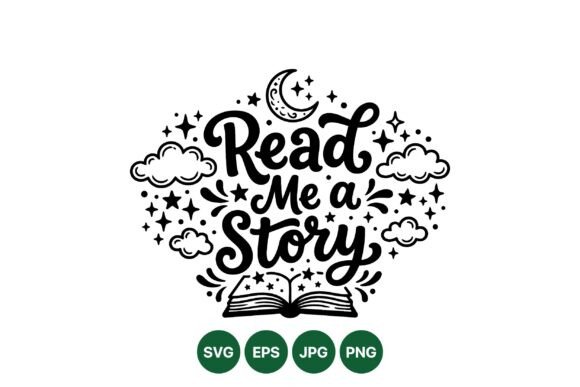
In the landscape of digital design, specific visual assets often serve as the cornerstone for a broader creative project. The Read Me a Story Clipart set is one such asset, offering more than just a decorative image. It provides a cohesive visual language centered around the themes of literacy, imagination, and bedtime routines. This collection features decorative hand lettering that spells out "read me a story," surrounded by whimsical elements like clouds, stars, a moon, and an open book. Rendered in a high-contrast black and white vector style, this artwork is designed to be versatile, scalable, and immediately usable across various professional and personal workflows.
For adults aged 20 to 50 who are navigating roles as educators, marketers, small business owners, or content creators, understanding how to integrate specific clipart into a production pipeline is essential. This guide explores the practical application of this specific asset pack, detailing how it fits into planning, execution, and final delivery phases of creative work.
Understanding the Asset and Its Technical Foundation
Before integrating any graphic into a workflow, it is critical to understand its technical specifications. The Read Me a Story Clipart is not merely a raster image; it is primarily a vector-based resource. The download package includes a ZIP folder containing SVG, PNG, JPG, and EPS files. This variety ensures compatibility with almost every software environment a modern creator might use.
The core strength of this asset lies in its vector format (SVG and EPS). Vector graphics are defined by mathematical equations rather than pixels. This means the artwork remains crisp and sharp regardless of how much it is scaled. Whether you need to print a tiny sticker for a bookmark or a massive banner for a library event, the lines remain clean. The high-contrast black and white aesthetic further enhances usability. In design theory, high contrast ensures legibility and strong visual impact, making these elements effective even when reduced in size or used on complex backgrounds.
The inclusion of PNG and JPG files serves a different purpose within the workflow. These raster formats are ideal for quick web previews, social media posts where file size is a concern, or when working in platforms that do not support native vector editing. By providing all these formats, the asset pack removes friction from the initial setup phase of a project, allowing the user to focus on composition rather than file conversion.
Integrating Clipart into Pre-Production Planning
The utility of the Read Me a Story Clipart begins long before the first pixel is placed. During the pre-production or planning phase, this asset can serve as a mood board anchor. For educators designing a reading curriculum or publishers conceptualizing a new children's book series, the whimsical charm of the moon, stars, and open book helps define the emotional tone of the project.
When planning a marketing campaign for a bookstore or a literacy nonprofit, this clipart can dictate the color palette and typography choices. Because the base image is black and white, it allows designers to experiment with accent colors without clashing with existing hues in the illustration. Planners can use the decorative hand lettering as a reference for font selection, ensuring that any additional text in the project complements the organic, hand-drawn feel of the original phrase.
Furthermore, during the decision-making process regarding branding, this asset offers a consistent visual motif. If a brand aims to evoke nostalgia, comfort, and creativity, incorporating these specific elements—clouds, stars, and books—into early wireframes helps stakeholders visualize the final outcome. It acts as a tangible touchstone that aligns the team on the desired aesthetic direction before significant resources are committed to custom illustration.
Execution: Workflow Integration and Tool Compatibility
Once the planning phase is complete, the execution stage requires seamless integration of the asset into the design software of choice. The multi-format nature of the download facilitates this across different tools. For professionals using Adobe Illustrator or CorelDRAW, the EPS and SVG files allow for deep customization. Users can ungroup elements to isolate the moon, the stars, or the open book, rearranging them to fit unique layouts.
In a typical workflow, a designer might import the SVG file into a layout program. The high-contrast nature of the line art makes it easy to trace over if a specific modification is needed, or to apply fill colors dynamically. For example, a blogger creating a "Reading Nook" post might use the PNG version for immediate insertion into a WordPress editor, while a print shop owner would utilize the EPS file to ensure the highest quality output for large-format posters.
This flexibility extends to interaction with other digital resources. The clipart can be layered over photographs to create mixed-media collages, used as watermarks on educational PDFs, or combined with stock photography to create composite images for advertisements. The open book element, in particular, serves as a natural container for text or product placement, allowing creators to embed information directly into the visual narrative.
Optimizing for Different Platforms
- Social Media: Use the PNG files for Instagram stories or Pinterest pins. The high contrast ensures the image stands out against colorful feeds.
- Print Materials: Utilize the EPS or high-resolution SVG files for flyers, bookmarks, and t-shirt designs. The vector quality prevents pixelation at large sizes.
- Digital Products: Incorporate the SVG into e-books or online courses. The scalability ensures clarity on tablets and mobile devices.
Practical Use Cases Across Industries
The versatility of the Read Me a Story Clipart makes it applicable across a wide range of sectors. Each industry has unique requirements, and this asset adapts to meet them through its inherent design qualities.
Educators and Librarians
Teachers and librarians frequently need engaging materials to promote reading habits. This clipart can be used to create classroom decorations, reading challenge certificates, or bulletin board headers. The whimsical mood appeals to children, while the professional quality satisfies institutional standards. Educators can print the high-contrast versions for coloring activities, turning the static image into an interactive learning tool.
Publishers and Authors
Self-published authors and small presses often struggle with budget constraints for cover art. This clipart offers a cost-effective solution for creating endpapers, chapter dividers, or promotional materials. The open book and celestial elements provide a thematic link that ties the physical book to the magic of storytelling, enhancing the reader's experience before they even turn the first page.
Small Business Owners and Marketers
Bookstores, cafes, and toy shops can leverage this asset for seasonal promotions. A coffee shop hosting a "Story Hour" can use the moon and stars to create signage that sets a cozy atmosphere. Marketers can use the hand-lettered phrase as a central element in email newsletters, driving engagement with a familiar and comforting visual cue.
Freelancers and Hobbyists
For scrapbookers, card makers, and DIY enthusiasts, the ability to scale the image without losing quality is invaluable. They can cut the designs using vinyl cutters for stickers or decals, knowing the lines will remain precise. The black and white style also simplifies the process of adding their own artistic flair through hand-coloring or mixed media techniques.
Quality Control and Long-Term Usability
Sustaining a high standard of output requires attention to quality control throughout the lifecycle of the asset. When using the Read Me a Story Clipart, it is important to verify the resolution and color mode before final export. While the vector files are inherently resolution-independent, converting them to raster formats for web use requires careful consideration of DPI settings to maintain sharpness.
Organization is another key factor for long-term efficiency. Since the download includes multiple file types, creators should establish a clear folder structure. Keeping the source SVG and EPS files separate from the exported PNGs and JPGs ensures that the master files are never accidentally altered or overwritten. This practice streamlines future projects, allowing users to return to the original asset for new variations without starting from scratch.
Consistency is vital for branding. Once a specific style is adopted—such as using the black and white version with a specific accent color—it should be maintained across all materials. This creates a recognizable visual identity. The durable nature of vector files ensures that this consistency can be maintained for years, whether updating a website today or printing a brochure five years from now.
Conclusion on Implementation Strategy
The Read Me a Story Clipart represents more than a single image; it is a functional tool that supports a comprehensive design strategy. From the initial planning stages where it helps define mood and direction, through the execution phase where its technical versatility enables seamless integration, to the final delivery where its high-quality output ensures professional results, this asset adds value at every step.
By understanding the technical strengths of SVG and EPS formats and recognizing the diverse applications across education, publishing, and marketing, professionals can maximize the return on this creative investment. The combination of whimsical charm and practical utility makes it an enduring resource for anyone dedicated to the craft of storytelling and visual communication. Integrating such well-crafted assets into your workflow not only saves time but elevates the overall quality of your creative output.