Art Deco Architecture Vector Pack: A Strategic Asset for Visual Communication
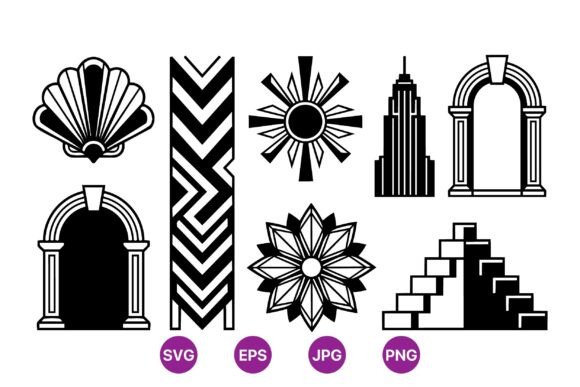
In the crowded landscape of digital design, the ability to convey authority, history, and sophistication instantly is a competitive advantage. The Art Deco Architecture Vector Pack offers more than just a set of graphics; it provides a visual vocabulary rooted in one of the most influential design movements of the 20th century. This collection features black and white vector icons depicting shells, decorative suns, floral motifs, architectural silhouettes, arches, and stepped pyramid forms. For entrepreneurs, marketers, and creators, these assets are not merely decorative elements but strategic tools for establishing brand identity, enhancing user experience, and communicating complex ideas with clarity.
The value of this pack lies in its technical precision and stylistic purity. Delivered as a ZIP folder containing SVG, PNG, JPG, and EPS files, the artwork ensures compatibility across every medium, from high-resolution print collateral to responsive web interfaces. Because the files are 100% vector-based (SVG and EPS), they offer infinite scalability without loss of quality. This technical reliability allows decision-makers to deploy assets confidently, knowing that a logo on a business card will look as sharp as a header image on a billboard. The pure black and white, high-contrast aesthetic further simplifies integration into existing brand systems, reducing the cognitive load on designers and accelerating production timelines.
Defining the Strategic Value of Art Deco Imagery
To understand why the Art Deco Architecture Vector Pack is useful, one must first recognize the psychological impact of the Art Deco style itself. Emerging in the 1920s and 30s, this movement was synonymous with modernity, luxury, and optimism. It combined geometric precision with ornamental elegance. When applied to modern branding or content creation, these elements evoke feelings of stability, exclusivity, and timeless quality.
For a small business owner launching a luxury real estate firm, or an entrepreneur creating a fintech app that values security and heritage, these visuals serve as immediate signals of trust. The stepped pyramid forms suggest growth and structure, while the arches and building silhouettes imply established institutions. Unlike generic clip art, which can dilute a brand's message, the minimalist style of this pack ensures that the imagery supports the narrative rather than distracting from it. By selecting specific icons—such as a decorative sun for energy or a shell for organic growth within a structured framework—creators can align their visual output with their core strategic goals.
Enhancing Brand Positioning Through Visual Consistency
Consistency is the cornerstone of effective branding. The monochromatic nature of the Art Deco Architecture Vector Pack makes it an ideal foundation for a cohesive visual system. In a world saturated with color, a deliberate choice to use high-contrast black and white graphics can distinguish a brand as bold and confident. This approach forces the audience to focus on the form and the message, stripping away unnecessary visual noise.
Consider a marketing campaign for a heritage hotel or a boutique architecture firm. Using the architectural building silhouettes and arches from this pack allows the brand to communicate its connection to physical spaces and historical craftsmanship without needing expensive photography. The vector format ensures these images remain crisp on mobile devices, where screen real estate is limited and attention spans are short. This adaptability supports long-term results by ensuring that brand assets remain relevant regardless of how technology evolves.
Practical Applications and Use Cases
The versatility of the included file formats—SVG, PNG, JPG, and EPS—means the Art Deco Architecture Vector Pack can be deployed across a wide spectrum of operational needs. However, successful implementation requires intentionality. Randomly scattering icons across a website or brochure rarely yields positive outcomes. Instead, these assets should be integrated into a planned visual hierarchy.
- Web Design and UI/UX: Use the SVG files for interactive elements like hover states, section dividers, or background patterns. The lightweight code of SVGs improves page load speeds, contributing to better SEO rankings and user retention. A minimalist flower shape or sunburst can serve as a subtle loading animation or a call-to-action accent.
- Print Collateral and Packaging: The EPS files are essential for high-quality printing. Whether designing business cards, brochures, or product packaging, the high-contrast black and white lines ensure perfect reproduction. The shell and decorative shapes work exceptionally well as embossed details or foil stamping guides, adding a tactile element of luxury.
- Presentation and Education: Educators and professionals presenting complex data can use the architectural silhouettes and pyramids to create infographics that are both aesthetically pleasing and easy to digest. The geometric nature of Art Deco lends itself well to organizing information hierarchically.
- Social Media and Digital Marketing: The PNG files provide ready-to-use assets for social media posts. A consistent use of these icons across platforms builds recognition. For example, a series of posts featuring the stepped pyramid forms could visually represent a "growth strategy" or "milestone achievement" series.
Planning Your Visual Narrative
Before downloading and implementing the Art Deco Architecture Vector Pack, it is crucial to define the specific role these graphics will play in your communication strategy. Ask yourself: What emotion do I want to evoke? Is it nostalgia, modernity, or stability? How does this imagery complement my typography and color palette?
A thoughtful approach involves mapping out where each icon type will appear. Perhaps the decorative sun is reserved for headers indicating new initiatives, while the arches frame testimonials or case studies. This level of planning transforms a simple graphic download into a comprehensive design system. It prevents the common pitfall of "asset overload," where too many competing visuals confuse the audience. By curating the selection, you maintain a clean, professional aesthetic that reinforces your authority.
Risks of Contextless Implementation
While the Art Deco Architecture Vector Pack is a powerful tool, it carries risks if used without clear goals. The primary danger is tonal dissonance. Art Deco is inherently formal and elegant. Applying these motifs to a brand that positions itself as chaotic, hyper-casual, or purely utilitarian can create a confusing message. If a startup focused on rapid, disruptive innovation uses heavy, ornate Art Deco borders, it may inadvertently signal bureaucracy or stagnation.
Furthermore, relying solely on pre-made vectors without customization can lead to a generic look. Since these files are available to many users, simply pasting them into a layout without modification may result in a design that feels unoriginal. To mitigate this, designers should manipulate the vectors—adjusting stroke weights, combining shapes, or integrating them with custom typography. The goal is to make the assets feel bespoke to your brand, even if they originate from a shared library.
Another risk is the overuse of high-contrast elements. While black and white offers elegance, excessive contrast can sometimes be jarring if not balanced with whitespace. Strategic planning dictates that these strong visual elements be used sparingly to draw attention to key areas, rather than overwhelming the entire canvas. Decision-makers must evaluate whether the visual weight of the icons supports the readability of the accompanying text.
Long-Term Value and Operational Efficiency
From an operational standpoint, investing in a high-quality vector pack like this one yields significant returns in productivity. The inclusion of multiple file formats eliminates the need for time-consuming conversions or outsourcing to find compatible assets. Teams can move faster from concept to execution because the technical hurdles are already removed. The scalability of the SVG and EPS files means that assets created today will remain usable for years, future-proofing the investment against changing display technologies.
Moreover, the minimalist style of the Art Deco Architecture Vector Pack aligns with current design trends that favor simplicity and functionality. As audiences become more discerning about visual clutter, brands that prioritize clean, purposeful design gain an edge. These icons facilitate that shift by providing sophisticated elements that do not demand excessive explanation. They allow the brand story to take center stage, supported by a visual language that is both historic and forward-looking.
Guidance for Intentional Use
To maximize the potential of this collection, treat it as a foundational resource rather than a quick fix. Start by auditing your current visual identity. Identify gaps where a touch of geometric elegance or architectural reference would strengthen your message. Then, select the specific icons from the pack that address those gaps directly.
For instance, if you are rebranding a financial consultancy, the stepped pyramid forms can symbolize wealth accumulation and structural integrity. If you are designing a travel blog focused on historic cities, the building silhouettes and arches provide immediate context. Always test the assets in various contexts before finalizing. Ensure they render correctly on dark backgrounds, scale down legibly for mobile screens, and print cleanly on textured paper.
Ultimately, the Art Deco Architecture Vector Pack is a versatile instrument in the creator's toolkit. Its value is not inherent in the files themselves but in how strategically they are deployed. By approaching these assets with a clear understanding of your goals, audience, and brand voice, you can transform simple black and white vectors into a powerful driver of engagement, trust, and long-term success. The decision to use them should be driven by a desire to enhance communication, not just to fill empty space. When used with intention, these designs elevate the perceived value of your work and solidify your position in a competitive market.